
Blog
Best Face Paint for Sensitive Skin: The 2026 Professional Safety Guide
Imagine the disappointment when a beautiful butterfly design turns into an itchy, red patch before the birthday cake is even served. If you’ve ever hesitated to pick up a brush because you’re worried about causing an allergic reaction or dealing with stubborn stains, you aren’t alone. Many artists feel overwhelmed by the confusing gap between “natural” labels and actual cosmetic safety. At Lets Paint Face Painting School, we believe your creative journey should be filled with wonder, not worry. Finding the best face paint for sensitive skin is about more than just reading a label; it’s about understanding professional standards and skin physiology.
In this 2026 safety guide, you’ll discover the most reliable, professional-grade brands that prioritize reactive skin. We’ll break down the latest MoCRA regulations so you can choose products with the confidence of a seasoned expert. You’ll also learn our essential protocols for patch testing and irritation-free removal to ensure every canvas stays comfortable. By the end of this article, you’ll have the technical knowledge and the creative spark needed to keep every smile bright and every skin type safe.
Key Takeaways
- Learn why the “non-toxic” label is often misleading and how to identify true cosmetic-grade products that meet 2026 safety standards.
- Discover how specific ingredients like glycerine help maintain flexibility on the skin, making them the best face paint for sensitive skin.
- Understand the critical differences between cheap craft store kits and professional brands like Fusion or Diamond FX that prioritize skin health.
- Master the professional 20-minute patch test protocol and learn the safest removal techniques to prevent post-art irritation.
- Find out how deep product knowledge and safety transparency can help you build a trusted, high-level career through Lets Paint Face Painting School.
Understanding Skin Sensitivity and Face Paint Safety
You might think sensitive skin is just a minor itch or a temporary redness, but for a professional artist, it represents a complex biological response. Whether it’s the dry, flaky patches of eczema, the red flare-ups of contact dermatitis, or general hyper-reactivity, understanding your canvas is the first step toward mastery. At Lets Paint Face Painting School, we teach our students that the skin is a living organ, not just a surface for art. Children’s skin is particularly delicate because it’s significantly more permeable than adult skin, meaning it absorbs substances more readily. This vulnerability is why choosing the best face paint for sensitive skin is a non-negotiable part of your professional kit setup.
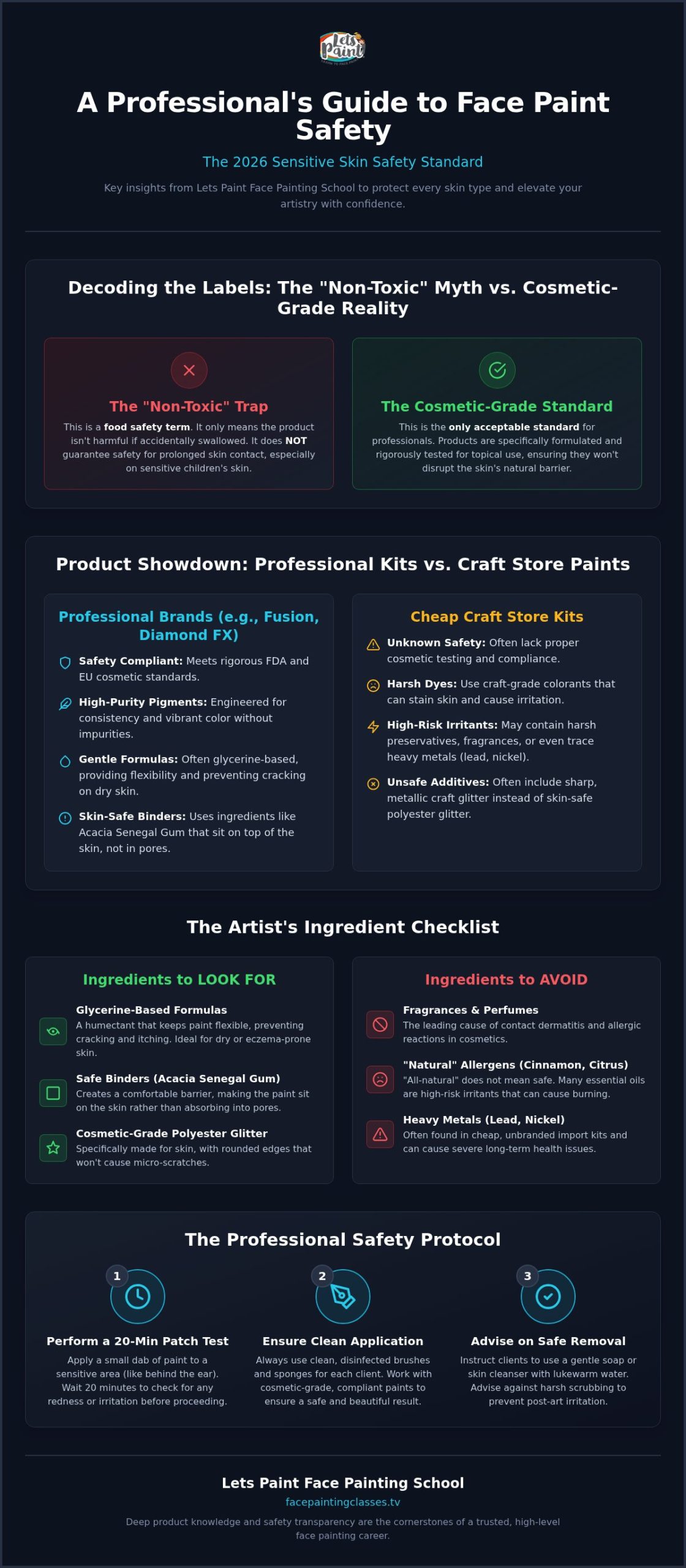
Many beginners get caught in the “non-toxic” trap often found on craft store labels. While it sounds safe, “non-toxic” is actually a food safety term indicating that a product won’t cause harm if a child accidentally swallows a bit of it. It doesn’t mean the product is safe for prolonged skin contact. To find the best face paint for sensitive skin, you must look for cosmetic-grade labels. These products are specifically formulated and tested for topical use, ensuring they won’t disrupt the skin’s natural barrier or cause long-term sensitization.
Common Triggers for Skin Irritation
Identifying the culprits behind a reaction helps you protect your clients. Fragrances and perfumes remain the leading cause of contact reactions in face painting. Even if a paint smells like “fresh berries,” those synthetic scents can be a nightmare for reactive pores. While preservatives are necessary to prevent mold growth, some older parabens can be harsh; many modern professional brands now use gentler alternatives. You should also be wary of cheap, unbranded import kits. These often contain trace amounts of heavy metals like lead or nickel, which can lead to severe allergic reactions and long-term health concerns.
The Importance of FDA and EU Compliance
When you see a pigment labeled as FDA-compliant, it means the specific color additives have been approved for use in cosmetics. However, safety doesn’t stop at the border. European (EU) standards are often even more rigorous, frequently banning chemicals that are still permitted in other regions. Modern water-based face and body paints have evolved into sophisticated cosmetic products that must meet these high regulatory bars to ensure user safety. Cosmetic-grade is the only acceptable standard for professional face painters. By sticking to these high-level requirements, you ensure that your artistic wonder never comes at the cost of a client’s comfort.
Key Ingredients: What to Look for in Sensitive-Friendly Makeup
To create art that truly shines, you must understand the chemistry behind the colors. Searching for the best face paint for sensitive skin requires looking past the pretty packaging and into the ingredient list. Professional paints usually fall into two categories: wax-based and glycerine-based formulas. While wax-based paints are fantastic for sharp line work, glycerine-based formulas are often gentler on reactive pores. Glycerine acts as a humectant, keeping the paint flexible on the skin’s surface. This flexibility is vital because it prevents the paint from cracking and itching as it dries, which is a common complaint for those with eczema or dry skin.
Don’t be fooled by the “all-natural” marketing craze. Just because an ingredient comes from the earth doesn’t mean it belongs on a child’s face. In fact, many organic components like cinnamon, clove, or citrus oils are high-risk allergens that can cause immediate burning sensations. Professional brands used by students at Lets Paint Face Painting School avoid these irritants in favor of high-quality, synthetic cosmetic pigments. These pigments are engineered for purity and consistency, unlike craft dyes which often contain unpredictable impurities that lead to staining and discomfort.
Safe Binders and Bases
Professional formulas use binders like Acacia Senegal Gum or high-purity paraffin wax. These ingredients ensure the paint sits comfortably on top of the skin rather than soaking into the pores. This “barrier” effect is a hallmark of quality. It’s also why we insist on using only cosmetic-grade polyester glitter. Unlike craft glitter, which is often made of glass or metal with sharp edges, polyester glitter is rounded and skin-safe. Mastering these technical details is what separates a hobbyist from a pro, a journey we explore deeply in The Ultimate Face Painting Course.
Ingredients to Explicitly Avoid
Safety is the foundation of a successful career. You must be vigilant about avoiding hidden dangers like nickel and lead, which are sometimes found in low-cost, unbranded kits. According to the Environmental Working Group’s face paint safety tips, heavy metal contamination is a significant risk in unregulated products. You should also watch for Methylisothiazolinone (MIT), a preservative known to trigger severe contact dermatitis. Azo dyes are another concern; while they provide vibrant colors, they can cause deep staining and lingering irritation that can frustrate your clients and damage your reputation.
Professional Brands vs. Craft Store Kits: A Safety Comparison
Choosing your tools is a pivotal moment in your artistic journey. While a cheap palette from a local party store looks tempting, these kits often rely on inexpensive fillers like chalk, clay, or starch. These ingredients draw moisture out of the skin, causing the tight, itchy sensation that ruins a child’s experience. At Lets Paint Face Painting School, we advocate for professional-grade supplies because they prioritize skin integrity over profit margins. High-quality paints use cosmetic-grade binders that glide over the surface rather than sinking into delicate pores.
Many beginners worry about the initial investment, but the “cost per face” tells a different story. A single 32g cake of the best face paint for sensitive skin can cover over 50 full-face designs. Budget kits require multiple layers to achieve even a hint of color, meaning you use more product and spend more money over time. Investing in brands like Fusion Body Art, TAG, or Diamond FX is a smart business move. For those starting out, our Face Painting for Beginners: The Ultimate 2026 Professional Guide provides a deeper dive into building your first kit with confidence.
Why Professional Quality Matters
Professional paints boast a significantly higher pigment load. You get vibrant, opaque color with a single, thin stroke. Thinner layers allow the skin to breathe, which is essential for comfort. When reviewing FDA novelty makeup safety guidelines, manufacturer transparency is vital. Reputable brands provide Material Safety Data Sheets (MSDS), giving you total peace of mind regarding every ingredient. These paints are also formulated for easy washability, usually requiring nothing more than mild soap and water for removal.
Top 3 Brands for Sensitive Skin in 2026
- Fusion Body Art (Glycerine-based): This is arguably the best face paint for sensitive skin for overall comfort. Its soft, creamy consistency makes it a dream for blending and soft backgrounds without any skin tugging.
- TAG Body Art (Wax-based): If you’re focusing on crisp details, TAG is a professional staple. The paraffin wax base allows for sharp lines that stay put, ensuring your art looks professional from start to finish.
- Diamond FX (High-Pigment): Known for its incredible opacity, Diamond FX allows you to create bold designs with minimal product. This reduces the weight on the skin, making it a fantastic choice for hyper-reactive clients.
How to Safely Apply and Remove Face Paint on Reactive Skin
Even when you’ve invested in the best face paint for sensitive skin, your application technique is what guarantees a comfortable and professional experience. At Lets Paint Face Painting School, we advocate for a safety-first mindset that begins before the brush even touches the skin. The professional patch test protocol is your most valuable tool for building client trust. Apply a small amount of product to the inner elbow or behind the ear and wait for 20 minutes. This short window of time allows you to identify hyper-reactivity before committing to a full-face design, ensuring your canvas remains comfortable throughout the process. If you’re looking to turn these safety protocols into stunning art, you might enjoy Mastering Advanced Face Painting Techniques.
Hygiene is just as critical as the ingredients in your kit. Cross-contamination is often the hidden cause of skin reactions, as bacteria trapped in sponges can cause breakouts that clients mistake for an allergic response. We teach our students to use a two-pot water system to keep their tools pristine. Using distilled water is the gold standard for sensitive clients because it lacks the chlorine and minerals found in tap water that can aggravate delicate pores. For an extra layer of protection, you can apply a thin, water-based barrier cream, but ensure it’s non-greasy so it doesn’t interfere with your pigment’s adhesion.
The Professional Application Process
To keep every design irritation-free, use high-quality synthetic brushes. These are non-porous and much easier to sanitize than natural hair alternatives. When working with highly reactive individuals, it’s a professional best practice to avoid the immediate eye and lip areas, as these tissues are the most permeable and prone to stinging. To learn more about setting up a professional, skin-safe workstation, explore our comprehensive training at Lets Paint Face Painting School.
Gentle Removal: The “Soap First” Method
Most beginners make the mistake of reaching for water first, but this can actually drive the pigment deeper into the pores and cause staining. Follow these three professional steps for a gentle cleanup:
- Step 1: Massage a gentle, fragrance-free liquid soap directly onto the dry paint. The soap breaks down the binders and lifts the pigment without the need for scrubbing.
- Step 2: Once the paint looks like a muddy paste, wipe it away with a soft cloth and lukewarm water. Avoid hot water, which can further sensitize the skin.
- Step 3: Always moisturize the skin after removal. Applying a simple, hypoallergenic lotion from a trusted beauty retailer like The Best Face Forward helps restore the skin’s natural barrier and leaves your client’s face feeling refreshed.
Elevating Your Kit with Professional Training
Mastering your tools is the bridge between a casual interest and a high-level career. While anyone can buy a palette, a professional understands the “why” behind every choice. Your ability to explain why you’ve selected the best face paint for sensitive skin transforms you from a person with a brush into a trusted expert. At Lets Paint Face Painting School, we believe that artistic wonder should always be supported by technical excellence. This is why The Ultimate Face Painting Course doesn’t just teach you how to paint a butterfly; it provides a deep dive into product chemistry and hygiene standards that protect your clients and your reputation.
By understanding the science of binders, pigments, and preservatives, you gain a competitive edge. You’ll move beyond the fear of causing a reaction and instead lead with confidence. This specialized knowledge is a hallmark of quality that parents and event organizers look for when hiring a professional. It’s about creating a safe, inclusive environment where every child, regardless of their skin type, can experience the joy of artistic change. If you are looking to expand your scientific knowledge into the healthcare field, you can discover PharmEDU for comprehensive pharmacology reviews. When you prioritize safety, you’re not just painting faces; you’re building a brand rooted in care and proficiency.
Turning Safety into a Selling Point
Transparency is a powerful marketing tool. When you talk to parents, don’t just say your paints are safe; explain your protocols. Mention your use of distilled water, your “soap first” removal technique, and your commitment to cosmetic-grade ingredients. If you’re ready to turn this expert mindset into a profitable venture, our guide on How to Start a Face Painting Business: The 2026 Professional Guide offers a roadmap for success. Crafting a clear safety statement for your website or social media profile that highlights your use of the best face paint for sensitive skin immediately signals that you’re a high-level professional who prioritizes client care.
Join the Community of Professional Artists
You don’t have to walk this path alone. Mentorship at Lets Paint Face Painting School connects you with a global community of artists who share your passion for excellence. Whether you’re refining your brushwork or looking to scale your practice through The Face Painting Business Course, we’re here to guide every step of your journey. Embracing a safety-first approach isn’t a limitation; it’s the foundation upon which you’ll build a vibrant, sustainable, and deeply rewarding career. Your transition from a curious beginner to a confident, professional artist is a transformative journey that begins with the very first stroke of your brush.
Step into Your Future as a Skin-Safe Expert
Your journey into the world of face painting is about more than just colors; it’s about the care and expertise you bring to every brushstroke. You now understand that finding the best face paint for sensitive skin is only the beginning. True safety comes from mastering professional hygiene protocols, choosing cosmetic-grade pigments over craft store alternatives, and leading with transparency. By prioritizing the health of your canvas, you build the kind of trust that defines a high-level career.
At Lets Paint Face Painting School, we’re dedicated to helping you bridge the gap between raw talent and professional success. You can master professional safety and design in The Ultimate Face Painting Course, where you’ll learn directly from professional artist Maria Mitchell. You’ll gain access to comprehensive training on kit hygiene and join a global community of safe, professional painters who share your passion for excellence. Don’t let the fear of sensitive skin hold your creativity back. Embrace the technical knowledge needed to protect your clients and watch your artistic vision take flight in a safe, vibrant way.
Frequently Asked Questions
Is hypoallergenic face paint 100% safe for everyone?
No, the term “hypoallergenic” is not a medical guarantee or a legal standard. It simply means the product is less likely to cause an allergic reaction because the manufacturer has excluded common irritants. Because every individual has unique triggers, even the best face paint for sensitive skin requires a professional patch test before a full application to ensure total safety for your client.
Can I use acrylic paint on my face if it says non-toxic?
You should never use acrylic paint on the skin, regardless of a “non-toxic” label. These paints are designed for paper or canvas and contain plastic binders and pigments that can cause severe contact dermatitis or chemical burns. Professional artistry requires cosmetic-grade products that are specifically formulated and tested for safe, prolonged contact with human skin.
What should I do if a child has a reaction to face paint?
Remove the paint immediately using a gentle, fragrance-free soap and lukewarm water if you notice any redness, swelling, or itching. Avoid scrubbing the area, as this can worsen the irritation. Once the skin is clean, you can apply a cool, damp cloth to soothe the area. If the reaction appears severe or involves any difficulty breathing, seek medical attention immediately.
How long can I leave face paint on sensitive skin?
We recommend removing face paint within four to six hours to minimize the risk of irritation. Leaving any cosmetic product on the skin for too long can clog pores and lead to heat rashes or breakouts. You should never allow a child to sleep in face paint, as the friction against a pillow can drive pigments deeper into the pores and cause significant staining.
Are there specific colors more likely to cause reactions?
Reds, pinks, and some oranges are more likely to cause temporary skin staining or mild sensitivity due to the nature of the pigments used. Additionally, some neon or UV pigments are not FDA-approved for use on the immediate eye area. At Lets Paint Face Painting School, we teach students to use these vibrant shades strategically and always check for specific pigment warnings on the label.
Is “natural” or “homemade” face paint safer for babies?
Homemade paints are actually riskier because they lack standardized preservative systems and often contain common food allergens like cornstarch or flour. It’s also important to follow the industry standard of not painting children under the age of three. Their skin is still developing and is far more permeable than adult skin, making any topical product a potential irritant.
How do I know if a face paint brand is FDA-approved?
You can verify a brand’s safety by looking for “FDA Compliant” or “Cosmetic Grade” on the packaging. Reputable professional brands will always list their ingredients along with Colour Index (CI) numbers for each pigment. Learning to identify these markers is a key part of the professional mindset we cultivate at Lets Paint Face Painting School to ensure you only use the highest quality supplies.
Can people with nut allergies use professional face paint?
Most professional brands are formulated without nut oils, but you must always check the Material Safety Data Sheet (MSDS) to be certain. Cross-contamination can also occur if you use the same brushes for multiple products. Providing the best face paint for sensitive skin experience means being prepared to show your ingredient lists to concerned parents and maintaining a pristine, allergen-aware kit.
